Puff Magic Font: Evaluation and Design Application Guide
Selecting the appropriate typeface is a critical decision in graphic design, particularly when a project requires specific thematic resonance. The Puff Magic Font presents itself as a specialized typographic solution inspired by the aesthetic of the wizarding world, specifically channeling the visual identity associated with Hufflepuff house. For designers and content creators evaluating this asset, understanding its functional capabilities, stylistic nuances, and practical limitations is essential for determining whether it aligns with project goals. This guide provides an objective assessment of the Puff Magic Font to assist in the selection process.
Defining the Typographic Character
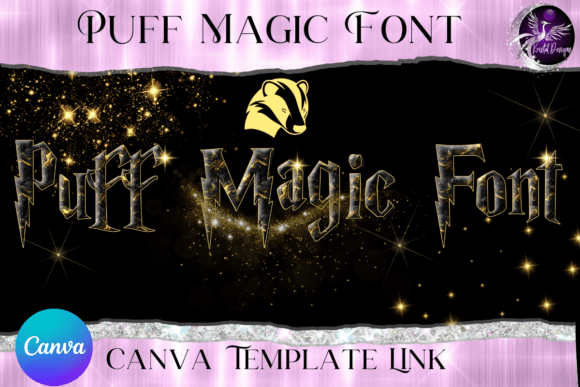
The Puff Magic Font is a display typeface that merges fantasy-inspired ornamentation with contemporary legibility. Unlike standard serif or sans-serif families designed for neutrality, this font carries inherent narrative weight. It incorporates the iconic yellow and black color palette associated with Hufflepuff, embedding thematic context directly into the glyph structure. This integration means the font functions not merely as text but as a graphical element that communicates house pride and magical ambiance simultaneously.
From a structural perspective, the typeface balances elegance with a bold, adventurous spirit. While many fantasy fonts sacrifice readability for elaborate decoration, Puff Magic maintains sufficient clarity for various applications. It includes a comprehensive character set comprising uppercase letters, lowercase letters, numbers, and symbols. This completeness distinguishes it from novelty fonts that often lack essential punctuation or numerals, thereby expanding its utility beyond simple headlines to include subheaders, captions, and short body copy where thematic consistency is required.
Strategic Reasons for Selection
Designers typically consider the Puff Magic Font when standard typography fails to convey a specific emotional or thematic connection. The primary driver for selecting this typeface is usually brand alignment within niche communities. For projects targeting fans of the wizarding world, generic medieval or fantasy fonts may feel impersonal or inaccurate. Puff Magic offers a tailored alternative that signals insider knowledge and respect for the source material through accurate color representation and stylistic homage.
Another significant factor is technical versatility in digital environments. The availability of transparent PNG files addresses a common workflow bottleneck. Designers working on web overlays, social media graphics, or video thumbnails often struggle with fonts that have opaque backgrounds or require complex masking. The pre-rendered transparency of Puff Magic allows for immediate layering over diverse backgrounds without additional editing, streamlining production time for digital-first content.
Benefits and Functional Advantages
Evaluating the tangible benefits of this font reveals several strengths for specific use cases. The high-quality file resolution ensures that the intricate details of the letterforms remain crisp across both print and digital mediums. In fantasy typography, edge definition is paramount; pixelation or blurring can undermine the magical aesthetic. The provided files maintain integrity at larger sizes, making them suitable for posters, merchandise, and high-resolution web headers.
Furthermore, the inclusion of a full alphanumeric set enhances design flexibility. Many themed fonts are limited to uppercase characters, which can make extended reading difficult and visually aggressive. The availability of lowercase letters in Puff Magic allows for better typographic hierarchy and improved readability in mixed-case settings. This feature enables designers to use the font for longer phrases or secondary information without breaking the immersive experience.
Technical Specifications Overview
- Character Set: Complete uppercase, lowercase, numerals, and essential symbols.
- File Format: High-resolution PNG with transparent background.
- Color Profile: Thematic yellow and black (Hufflepuff palette).
- Style Classification: Fantasy display / Thematic decorative.
- Primary Application: Headers, overlays, merchandise, fan content.
Tradeoffs and Practical Considerations
Despite its strengths, the Puff Magic Font carries inherent tradeoffs that must be weighed during evaluation. The most significant consideration is accessibility. The integrated color scheme, while thematically accurate, may present contrast challenges depending on the background color chosen for the project. Yellow text on light backgrounds or black text on dark backgrounds can fail WCAG accessibility standards. Designers must test contrast ratios rigorously to ensure content remains readable for users with visual impairments.
Licensing and usage rights also require careful verification. Fonts inspired by established intellectual property often occupy a complex legal space. Users must determine whether the font is licensed for personal use only or if commercial licensing is available. Using fan-inspired assets in monetized projects without proper clearance can lead to copyright issues. Additionally, because the font relies on specific colors, it lacks the adaptability of single-color vector fonts. If a project’s color scheme shifts away from the Hufflepuff palette, the font may become unusable without significant modification.
Readability at small sizes is another limitation. As a decorative display font, the ornamental details that define its character can become visual noise when scaled down. It is generally unsuitable for dense body text, fine print, or mobile interfaces where screen real estate is limited. In these contexts, the font may hinder rather than enhance communication.
Ideal Use Cases vs. Alternatives
The Puff Magic Font is a strong fit for projects where thematic immersion takes precedence over utilitarian readability. Ideal scenarios include event invitations for themed parties, YouTube thumbnails for fandom-related content, merchandise designs for house-specific apparel, and social media announcements celebrating franchise milestones. In these contexts, the font acts as a visual shorthand, instantly communicating the intended vibe to the target audience.
Conversely, alternatives should be considered for projects requiring extensive text blocks, formal corporate branding unrelated to fandom, or accessible educational materials. For long-form articles or books set in the wizarding world, a clean serif font like Garamond or Caslon paired with Puff Magic for chapter titles would provide a superior reading experience. For projects needing similar magical aesthetics but different house affiliations, designers should seek variants specifically colored for Gryffindor, Slytherin, or Ravenclaw to maintain canonical accuracy.
Making the Final Decision
Determining whether Puff Magic Font is the right choice involves assessing three key factors: thematic specificity, technical requirements, and audience expectations. If the project explicitly celebrates Hufflepuff identity and requires a plug-and-play solution for digital overlays, this font offers significant efficiency and aesthetic value. However, if the project demands high accessibility, multi-color adaptability, or extensive body text, it should be relegated to an accent role or replaced entirely.
Ultimately, successful typography serves the content. Puff Magic Font excels as a specialized tool for evoking the charm and loyalty associated with its inspiration. By understanding its specific advantages and acknowledging its limitations, designers can leverage this typeface effectively to create enchanting, professional-grade work that resonates authentically with the wizarding community. Careful evaluation ensures that the magic of the typography supports, rather than overshadows, the core message of the design.