Bandwagon Regular Embroidery Font - S: Integrating Bold Typography into Production Workflows
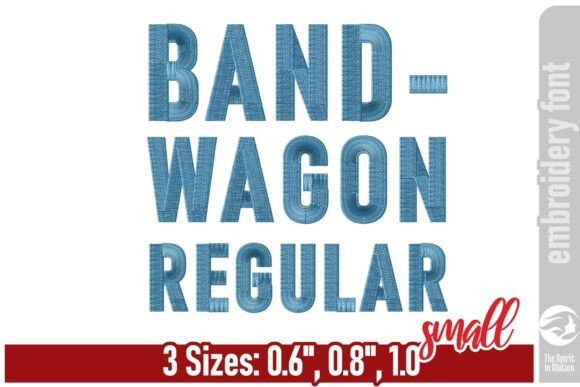
Selecting the correct typeface is often the most critical decision in an embroidery digitizing workflow. The font dictates not only the aesthetic outcome but also the production speed, material compatibility, and overall legibility of the finished product. Bandwagon Regular Embroidery Font - S serves as a specialized tool within this ecosystem, designed specifically for scenarios where space is limited but visual impact cannot be compromised. As a bold and condensed block embroidery font with clean lines and strong geometry, it addresses specific production challenges that standard serif or script fonts cannot solve.
This typeface fits into the broader digitizing process as a solution for high-density branding and athletic apparel. Its tall, uniform characters provide a modern structure that stitches efficiently on caps, jackets, and team wear. For professionals managing custom decoration businesses or hobbyists tackling complex personalization projects, understanding how to leverage the specific attributes of Bandwagon Regular ensures that design intent translates accurately from screen to fabric without unnecessary revisions or stitch-outs.
Pre-Production Planning and Design Assessment
Before opening digitizing software or loading a hoop, Bandwagon Regular Embroidery Font - S should be evaluated during the quoting and design approval phase. Because this font is condensed, it allows for longer character counts in restricted horizontal spaces. This is particularly relevant when working with cap fronts, sleeve cuffs, or pocket placements where width is the primary constraint. During the planning stage, use this font to test fit long names or acronyms that would typically require resizing or abbreviating with wider typefaces.
The geometric nature of Bandwagon Regular also influences material selection. Clean lines and strong geometry generally perform best on stable substrates or when adequate stabilization is used. When planning a project involving stretchy performance wear or textured towels, recognize that this font’s bold structure requires a firm foundation to prevent distortion. Incorporating this assessment early prevents mid-production failures. If the client requests a vintage or distressed look, this font may serve as a base layer, but if they require crisp, corporate legibility, its inherent block style makes it an ideal primary candidate.
Evaluating Technical Specifications Before Stitching
Efficiency in embroidery comes from knowing your assets before running a job. The download file for Bandwagon Regular includes vital data regarding stitch counts and dimensions. While the summary information provided typically references the letter “A” as a baseline, production managers and digitizers must consult the full dimension details via the More Sewing Info PDF. Relying solely on the summary can lead to spacing errors, as letters like “W” or “M” will have significantly different stitch counts and widths than the reference character.
- Verify Maximum Height: Ensure the font size selected fits within the maximum sewing field of your specific machine hoop, accounting for the condensed verticality.
- Calculate Thread Consumption: Use the detailed PDF data to estimate thread usage more accurately than generic software calculators, which often misjudge bold block fonts.
- Check Minimum Size Thresholds: Bold fonts can lose definition if scaled too small; confirm the minimum legible size for Bandwagon Regular to avoid muddy stitching on fine garments.
Integration with Digitizing Software and Tools
Bandwagon Regular Embroidery Font - S does not exist in a vacuum; it interacts directly with your digitizing platform’s auto-lettering or manual punching tools. When importing this font, treat it as a precision asset rather than a generic text input. Most professional software allows for kerning adjustments and pull compensation settings. Given the bold weight of this font, adjusting pull compensation is essential. Thick columns tend to shrink horizontally during stitching; pre-compensating within the software ensures the final physical output matches the digital proof.
For users utilizing auto-digitizing features, Bandwagon Regular’s clean geometry usually translates to efficient stitch paths. However, manual verification is recommended. The straight lines and sharp corners characteristic of this block font can sometimes result in jump stitches if the software optimizes for speed over aesthetics. Reviewing the stitch sequence allows you to reorder objects to minimize trims and jumps, maintaining the confident look of the lettering while reducing machine runtime. This integration step transforms a static font file into a dynamic production asset.
Workflow Compatibility Across Platforms
Cross-platform consistency is vital for shops using multiple machines or outsourcing digitizing. Bandwagon Regular maintains its structural integrity across various file formats because of its simple geometry. Unlike complex scripts that may degrade when converted between DST, PES, or EXP formats, block fonts retain their edge definition. When setting up a standardized library for team apparel or corporate accounts, save a master version of this font with your preferred density and underlay settings already applied. This creates a reusable template that reduces setup time for repeat orders and ensures that a jacket stitched today matches one stitched six months from now.
Execution Strategies for Caps and Athletic Apparel
The primary use case for Bandwagon Regular Embroidery Font - S is athletic and headwear applications. Executing this font on curved surfaces requires specific hooping and stabilization strategies. On caps, the condensed vertical profile helps navigate the seam allowance near the center bill. Positioning the design slightly higher or lower based on the font’s uniform height can prevent needle strikes on the visor hardware while maximizing the printable area.
When stitching on heavy wool melton or nylon windbreakers, the bold nature of Bandwagon Regular provides necessary contrast. Thin fonts often get swallowed by the texture of these materials. To maintain the "confident" look described in the font specifications, consider using a heavier top thread or doubling the underlay on textured fabrics. This raises the stitch column above the fabric nap, preserving the clean lines. The execution phase is where the theoretical benefits of a condensed block font are realized through proper mechanical application.
Quality Control and Consistency Checks
Post-production review is part of the implementation cycle. After stitching out Bandwagon Regular, evaluate the registration between the outline and fill (if applicable) or the alignment of stacked text. Because this font relies on strong geometry, any misalignment is immediately visible. Establish a quality control checklist specifically for block fonts:
- Inspect corner definition to ensure they remain sharp and do not round off due to excessive density.
- Measure the actual stitched height against the digital specification to verify shrinkage compensation accuracy.
- Check for fabric puckering around bold columns, indicating a need for adjusted tension or additional stabilizer in future runs.
Documenting these observations creates a feedback loop. If Bandwagon Regular consistently requires +2% horizontal scaling on a specific polyester blend, record this in your shop’s technical notes. Over time, this data refines the workflow, making the font faster and easier to implement across diverse projects.
Long-Term Asset Management and Business Application
Beyond individual projects, Bandwagon Regular Embroidery Font - S functions as a business asset for branding consistency. For entrepreneurs and marketers offering merchandise, this font offers a versatile "varsity" or "industrial" aesthetic that appeals to a wide demographic aged 20–50. It bridges the gap between retro nostalgia and modern minimalism. By standardizing this font for specific product lines, businesses reduce decision fatigue for customers and streamline the ordering process.
Organization plays a key role in long-term usability. Store the font files, the More Sewing Info PDF, and any custom presets in a centralized, cloud-accessible location. Tag the asset with relevant metadata such as "condensed," "athletic," "cap-friendly," and "block." When a rush order arrives requiring quick turnaround, searchable organization allows for instant retrieval and deployment. This level of preparedness distinguishes professional operations from amateur efforts, turning a simple font purchase into a component of a scalable production system.
Ultimately, the value of Bandwagon Regular lies in its reliability. It removes variables from the embroidery equation. By understanding its dimensions, respecting its geometric requirements, and integrating it thoughtfully into pre-production, digitizing, and finishing workflows, users can achieve consistent, high-quality results. Whether creating team uniforms, promotional gear, or custom fashion, this font provides the structural confidence necessary for professional-grade embroidery.