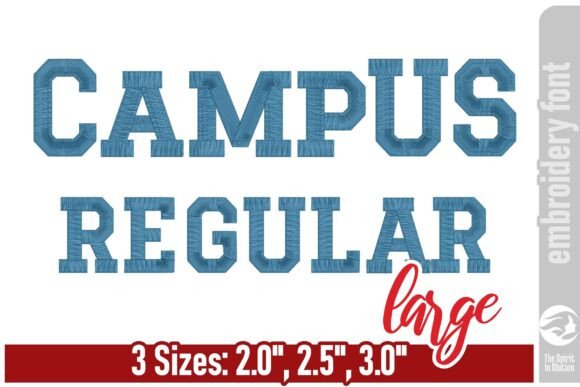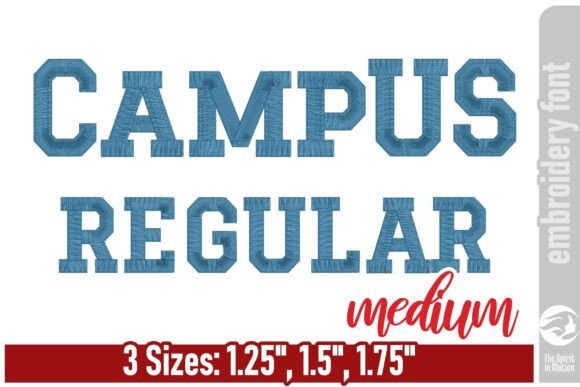
Campus Regular Embroidery Font: Elevating Athletic and Varsity Designs
In the world of machine embroidery, typography is more than just text; it is the visual voice of a design. When creating apparel for sports teams, educational institutions, or streetwear brands, the choice of font dictates the entire mood of the piece. Among the most enduring and versatile typefaces in this niche is the Campus Regular Embroidery Font - Medium. This specific digitized typeface has become a staple for embroiderers who need to balance traditional collegiate aesthetics with modern durability.
Understanding why this font works so well requires looking beyond its appearance and examining its construction, application, and technical specifications. Whether you are a hobbyist stitching your first varsity jacket or a commercial shop owner fulfilling bulk orders for team gear, mastering the nuances of the Campus font family can significantly improve the quality and professionalism of your finished products.
The Anatomy of Athletic Typography
To appreciate the Campus Regular Embroidery Font, one must first understand the genre it belongs to. Athletic and varsity fonts are distinct from standard serif or sans-serif typefaces used in print. They are characterized by bold strokes, slab serifs, and a geometric stability that conveys strength and tradition. However, what looks good on a computer screen does not always translate to fabric.
The Campus Regular Medium weight is specifically digitized to bridge this gap. Unlike generic fonts that are auto-digitized, this typeface is engineered for the needle and thread. The "Medium" designation is particularly significant. In embroidery, weight refers to the thickness of the column stitches. A medium weight offers the perfect compromise: it is substantial enough to be legible from a distance on a football field or gymnasium floor, yet refined enough to maintain clarity on smaller items like caps or bags without causing fabric puckering.
Versatility Across Three Sizes
One of the primary advantages of this specific download is its scalability through pre-set sizes. The font comes in three distinct size variations, each optimized for different applications. This eliminates the guesswork and potential distortion that occurs when manually resizing embroidery files.
- Small Size: Ideal for secondary personalization, such as sleeve names, hat fronts, or small logos on chest pockets. The stitch density is adjusted to prevent thread breaks on tighter curves.
- Medium Size: The workhorse of the set. Perfect for standard back-of-jersey names, tote bags, and mid-sized crest designs. This size balances coverage and stitch count efficiency.
- Large Size: Designed for high-impact statements. Used for large varsity letters, banner text, or towel embroidery. The underlay structure in this size is reinforced to support heavier thread coverage on stable fabrics.
Having these three dedicated sizes ensures that the integrity of the letterforms remains intact regardless of the project scale. When you resize an embroidery file arbitrarily, the stitch length and density can become compromised, leading to poor registration or excessive thread usage. By utilizing the provided size options, you ensure optimal performance for every glyph.
Practical Applications in Modern Apparel
The Campus Regular Embroidery Font is not limited to traditional letterman jackets. Its clean lines and sporty aesthetic make it relevant across various sectors of modern fashion and merchandise.
School Spirit and Team Gear
This is the most obvious application, but execution matters. For team uniforms, consistency is key. The inclusion of both uppercase and lowercase glyphs allows for dynamic layouts. While all-caps is traditional for surnames, having access to lowercase letters enables creative designs for club sports, intramural teams, or spirit wear where a slightly less aggressive, more approachable look is desired. The font’s structure pairs exceptionally well with chenille patches, satin tackle twill, and direct-to-garment embroidery.
Personalized Sportswear and Athleisure
The rise of athleisure has blurred the lines between performance wear and daily fashion. Consumers now seek personalized gym bags, yoga mats, and hoodies that feature collegiate-style typography. The Campus font taps into this nostalgia while remaining crisp enough for contemporary tastes. Because the Medium weight is not overly bulky, it sits comfortably on stretchy performance fabrics like polyester blends and spandex, which are common in modern activewear.
Merchandise and Branding
For businesses and creators, this font serves as a reliable tool for branding. It communicates reliability and heritage. Coffee shops, breweries, and local businesses often use varsity-style fonts to evoke a sense of community and established history. Stitching this font onto canvas totes, denim aprons, or trucker hats creates a premium, custom feel that printed vinyl simply cannot replicate.
Technical Considerations for Best Results
While the Campus Regular Embroidery Font is user-friendly, achieving professional results requires attention to technical details. Understanding the relationship between the font and your materials is essential for success.
Fabric Stability and Hooping
Athletic fonts typically utilize dense satin stitches or heavy fill patterns. This puts significant stress on the fabric. When using the Large or even Medium sizes, proper stabilization is non-negotiable. For knit fabrics like jerseys or sweatshirts, use a cut-away stabilizer to prevent the design from distorting after washing. For woven fabrics like canvas or denim, a tear-away may suffice, but always test first. Tight hooping is also critical; loose fabric will cause the bold columns of the Campus font to misalign, resulting in jagged edges.
Thread Selection and Tension
Bold fonts show tension issues more readily than thin script fonts. If your bobbin thread is too tight, the top thread will pull to the back, making the letters look narrow. If it is too loose, loops may appear on the surface. Because this font features defined edges, dialing in your machine’s tension before starting a production run is vital. Additionally, consider thread weight. Standard 40wt rayon or polyester is ideal for the Medium and Small sizes. For the Large size, some embroiderers prefer a thicker thread or adjusting the density settings to reduce stitch count while maintaining solid coverage.
Navigating Sizing and Stitch Information
A common point of confusion for new users is understanding exact dimensions. Digital embroidery is not like selecting a font size in a word processor; physical measurements vary based on digitizing parameters.
When reviewing product details for the Campus Regular Embroidery Font - Medium, you will often see reference data based on the letter “A.” This serves as a benchmark summary. For example, the stitch count and height of the “A” give you a baseline for estimating production time and thread consumption. However, letters like “W,” “M,” or “I” will naturally deviate from this average.
It is crucial not to rely solely on summary data for precision work. To access the full dimension details of all letters in this set, users should utilize the More Sewing Info PDF button typically found on the product page. This document provides comprehensive charts detailing the exact width, height, and stitch count for every glyph in the alphabet. Consulting this resource prevents costly mistakes, such as designing a nameplate that exceeds the hoop area or embroidery field limit.
Common Misunderstandings About Athletic Fonts
Even experienced embroiderers sometimes harbor misconceptions about varsity-style typefaces. Clarifying these can save time and materials.
- "Bolder is Always Better": There is a tendency to assume that athletic gear requires the heaviest possible font. However, on lightweight performance fabrics, a heavy font can act like armor, making the garment stiff and uncomfortable. The Medium weight of Campus Regular exists specifically to solve this problem, offering visual impact without compromising garment drape.
- "One Stabilizer Fits All": Because this font is categorized as "athletic," users often default to heavy-duty stabilizers. Remember that the substrate dictates the stabilizer, not just the font style. Embroidering this font on a silk blend hoodie requires a completely different approach than stitching it on a wool melton jacket.
- "Digital Resizing is Safe": As mentioned earlier, stretching or shrinking embroidery files changes stitch properties. Always prioritize the included size variations over manual software resizing to maintain the professional finish intended by the digitizer.
Conclusion
The Campus Regular Embroidery Font - Medium is more than just a collection of digital stitches; it is a foundational tool for anyone involved in apparel decoration. Its blend of classic varsity charm and technical precision makes it suitable for everything from high school football uniforms to boutique streetwear collections. By leveraging the three included sizes, consulting detailed sizing PDFs, and respecting fabric mechanics, embroiderers can produce work that stands up to both competition and commerce. In an industry where details define quality, choosing the right font is the first step toward excellence.