Curvy Applique Embroidery Font: Elevating Textile Projects with Bold, Handmade Charm
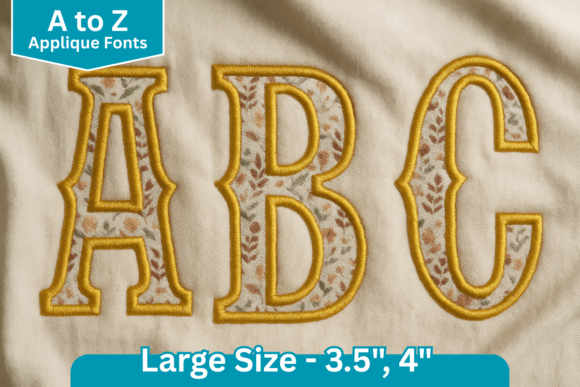
When you are staring at a blank canvas of fabric, trying to decide how to personalize a project, the difference between a standard satin stitch and an appliqué design is often the difference between "factory-made" and "handcrafted." The Curvy Applique Embroidery Font bridges that gap specifically for creators who want their text to have weight, texture, and personality. Unlike traditional embroidery fonts that rely solely on thread density to create legibility, this digitized set uses fabric pieces to form the letter shapes. This fundamental shift in construction changes not only how the design looks but also how it performs on various materials and in different real-world applications.
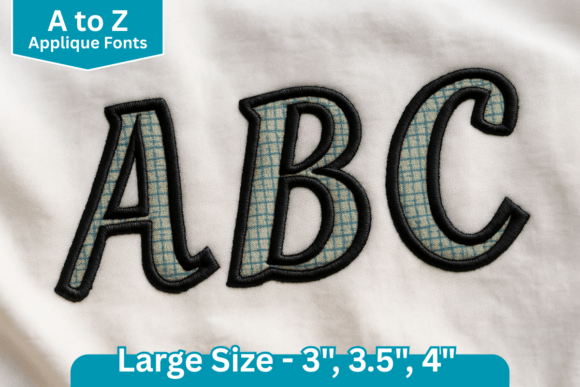
This specific alphabet set includes all uppercase letters from A to Z, meticulously digitized to ensure clean registration lines and precise stitching. Because appliqué requires multiple stops for fabric placement and tacking, the quality of the digitization is paramount. A poorly digitized appliqué font results in frayed edges or gaps between the fabric and the securing stitches. The Curvy Applique Embroidery Font addresses this by offering three distinct sizes, each tested to maintain structural integrity. Whether you are working on a delicate baby bib or a heavy canvas tote, having size options allows you to scale the boldness of the lettering to match the weight of your base material without distorting the design.
Transforming Children’s Wear and Nursery Decor
One of the most frequent use cases for this style of typography is in children's projects. There is a practical reason for this beyond aesthetics. Satin stitch letters on stretchy knits, like cotton jersey or ribbed onesies, can sometimes cause puckering or make the fabric stiff and uncomfortable against sensitive skin. Appliqué distributes the tension across a wider area of fabric, making the finished garment softer and more flexible.
For parents or small business owners creating custom nursery decor, the curvy nature of this font adds a necessary softness. Sharp, angular block letters can sometimes feel too industrial for a baby blanket or crib sheet. The rounded edges of the Curvy Applique Embroidery Font evoke a sense of warmth and nostalgia. When personalizing items like diaper bags or changing pad covers, the larger size option provides excellent visibility while maintaining that handmade heirloom quality. It turns a functional item into a keepsake. Furthermore, because the letters are made of fabric, you can introduce patterns or contrasting textures—like using minky fabric for the letters on a smooth cotton background—to add sensory elements that are highly valued in early childhood development products.
Sportswear and Team Apparel Applications
While "curvy" might suggest delicacy, this font set holds its own in the sportswear sector. Varsity and athletic lettering traditionally use felt appliqué, but purchasing pre-cut chenille or felt letters limits your flexibility and inventory. Digitizing this look allows for on-demand customization without stocking physical letter patches.
Consider the scenario of a local dance team or cheer squad needing personalized warm-up jackets. Standard collegiate block fonts can look overly aggressive or masculine. The Curvy Applique Embroidery Font offers a feminine yet bold alternative that reads clearly from a distance. The three available sizes are particularly useful here; you might use the largest size for the athlete's name across the back of a jacket and a medium or small size for initials on a cuff or chest pocket. The bold, handmade look distinguishes custom team gear from generic catalog orders, adding perceived value to the merchandise. For entrepreneurs running spirit wear businesses, this font provides a unique selling proposition that separates your offerings from competitors using standard machine-built-in fonts.
Home Decor and Lifestyle Accessories
In the realm of home decor and bags, texture is everything. Throw pillows, tea towels, and tote bags benefit immensely from the dimensional quality of appliqué. Flat embroidery can sometimes get lost on textured home fabrics like linen or burlap. By applying a separate piece of fabric for the letter itself, you create a layer of contrast that ensures readability and visual interest.
For example, when creating monogrammed linen napkins for weddings or events, the Curvy Applique Embroidery Font adds a tactile element that guests can actually feel. It suggests a level of care and intention that printed vinyl or simple thread cannot replicate. In bag making, such as creating market totes or cosmetic pouches, the durability of appliqué is a significant advantage. Bags undergo friction and washing; a well-digitized appliqué letter, secured with proper edge finishes, tends to withstand wear better than high-density satin stitches which can snag or unravel over time. The bold aesthetic of this font also aligns perfectly with current trends in "cottagecore" and artisanal home styling, where imperfect, organic shapes are preferred over rigid geometry.
Technical Considerations for Successful Stitching
Before loading this design into your machine, understanding the technical specifications is crucial for avoiding frustration. As noted in the product details, the size and stitch count information provided typically refers to the letter “A” as a sample. However, letters vary significantly in complexity. An “I” will naturally have a lower stitch count and smaller footprint than a “W” or “M.” Always refer to the included sewing information PDF for the exact dimensions of all 78 characters (including potential variations or numbers if included in the full set) to ensure your layout fits within your hoop and your design field.
Compatibility is another key factor. This package offers multiple file formats, but you must verify which one suits your specific machine brand. While modern machines are versatile, older models may have limitations on stitch counts or field sizes, especially when using the largest version of these curvy letters. Always test stitch the largest letter you plan to use on a scrap of your actual project fabric before committing to the final piece. Appliqué behaves differently on fleece versus quilting cotton versus denim; the stabilization requirements change accordingly. Using a tear-away stabilizer might suffice for stable woven fabrics, but a cut-away is often necessary for knits to prevent the curvy edges from tunneling or pulling away from the base fabric after washing.
Choosing the Right Fabric for the Appliqué Layer
The success of the Curvy Applique Embroidery Font depends heavily on what fabric you choose for the letters themselves. Because the design features curves, fabrics that fray easily can be problematic. Tightly woven cottons, wool felt, and non-fray synthetics are ideal choices. If you wish to use a looser weave or a fabric prone to fraying, consider fusing a lightweight interfacing to the back of your appliqué fabric before cutting. This adds stability and makes the placement step during embroidery much smoother. Avoid thick pile fabrics like terry cloth for the appliqué layer unless your machine has a very strong piercing needle, as the bulk can cause registration issues with the satin border that secures the letter.
Navigating Design Limitations and Strengths
It is helpful to recognize where this font shines and where other options might be better. The primary strength of the Curvy Applique Embroidery Font is its bold, decorative presence. It is designed to be seen and felt. However, because it is an uppercase-only set, it is less suitable for long paragraphs of text or sentences requiring mixed case. It excels at names, initials, short phrases, and single-word statements. If your project requires extensive body text, pair this appliqué font with a simpler, lightweight sans-serif embroidery font for the secondary information.
Additionally, consider the production time. Appliqué inherently takes longer to stitch than standard fonts due to the fabric placement steps and trims. For high-volume commercial production where speed is the only metric, this may not be the most efficient choice. However, for bespoke items, gifts, and premium goods where the "handmade look" commands a higher price point, the extra machine time is an investment in quality. The bold, handmade aesthetic signals to the end-user that this item was created with specific attention to detail, justifying the effort involved in selecting and executing this specialized digitized set.